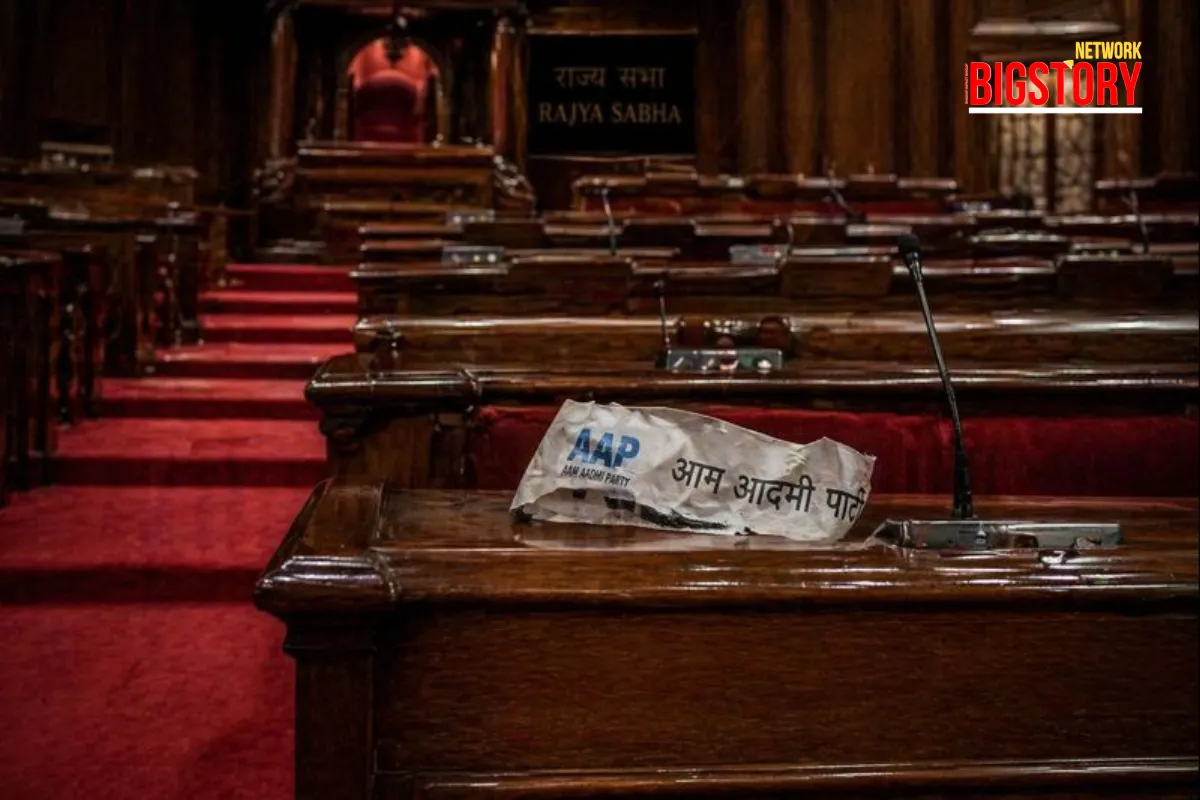
A massive political earthquake has just decimated the Aam Aadmi Party's national leadership. Utilizing a constitutional loophole, 70% of AAP's Upper House parliamentarians have executed a legal merger with the ruling BJP, permanently muting their former party in the Rajya Sabha.
 Brajesh Mishra
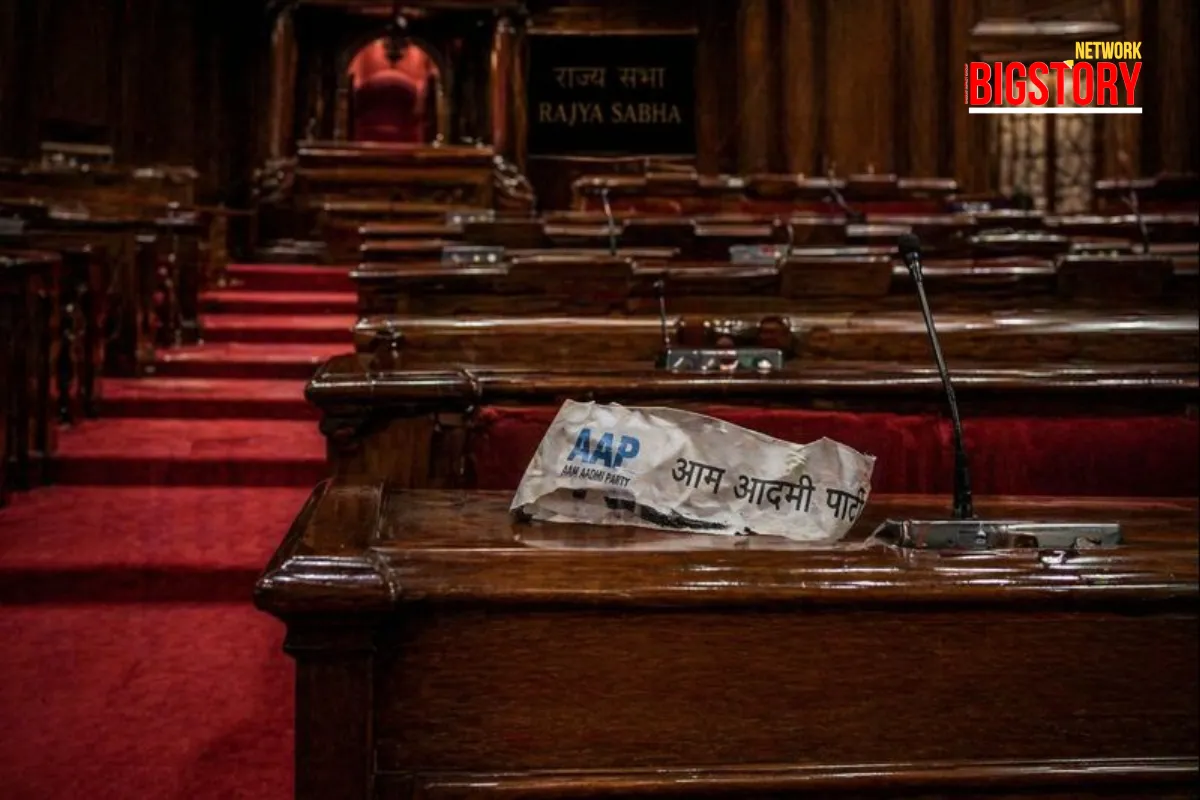
A massive political earthquake has just decimated the Aam Aadmi Party's (AAP) national leadership. This afternoon, Friday, April 24, 2026, senior AAP leader Raghav Chadha officially resigned from the party and announced a formal merger with the Bharatiya Janata Party (BJP), taking six other Rajya Sabha MPs with him in what is undeniably the biggest defection crisis in AAP's history.
Addressing a highly anticipated press conference in New Delhi today, Raghav Chadha announced his resignation, officially severing his 15-year association with the party he helped build. Shortly after, Chadha—along with MPs Sandeep Pathak and Ashok Mittal—formally joined the BJP at the party headquarters in the presence of BJP National President Nitin Nabin.
The breakaway faction represents a devastating drain of AAP's top-tier talent. The seven defecting MPs are Raghav Chadha, Sandeep Pathak, Ashok Mittal, Swati Maliwal, Harbhajan Singh, Rajinder Gupta, and Vikram Sahney. The mechanics of the defection were precisely calculated. By securing the exit of exactly 7 out of AAP's 10 Rajya Sabha MPs, Chadha's faction successfully crossed the crucial two-thirds threshold required by the Constitution. This allows them to execute a legal "merger" with the BJP as a legislative bloc, fully protecting all seven leaders from disqualification under the stringent Anti-Defection Law (Tenth Schedule).
During his press conference, Chadha launched a blistering attack on Arvind Kejriwal's leadership. "I am the right man in the wrong party," Chadha declared. He claimed that AAP has completely strayed from its anti-corruption roots and is now trapped in the hands of "corrupt and compromised individuals," adding that he chose to distance himself because he "did not want to be a part of their crimes."
Conversely, he heavily praised Prime Minister Narendra Modi and Home Minister Amit Shah, citing their decisive national security and economic policies as his primary motivation for crossing the aisle.
The Aam Aadmi Party is reeling from the betrayal. AAP MP Sanjay Singh immediately accused the BJP of executing "Operation Lotus" to intentionally derail the Bhagwant Mann-led Punjab government. Singh announced that AAP is officially submitting a letter to the Rajya Sabha Chairman demanding the immediate disqualification of the defectors, though legal experts note the two-thirds merger provision makes this highly unlikely to succeed.
Arvind Kejriwal took to X (formerly Twitter) to express his fury, writing, "The BJP has once again given Punjabis a shove." Meanwhile, Punjab Chief Minister Bhagwant Mann warned that the defecting MPs do not represent the spirit of Punjab and will soon find themselves entirely marginalized within the BJP machinery.
While the political theater focuses on the personal betrayal of Arvind Kejriwal's most visible young lieutenant, the true "Missed Angle" here is the sudden, complete destruction of AAP's legislative power in New Delhi.
With 10 MPs, AAP was a highly disruptive, coordinated opposition bloc in the Rajya Sabha. They possessed the sheer numbers to stall bills, demand extensive floor time, and force procedural votes.
By ripping away 70% of their presence in a single afternoon, the BJP hasn't just neutralized a vocal critic. They have effectively and permanently muted AAP's ability to operate as a national opposition party in the Indian Parliament. As the nation sits right in the middle of a massive state election season, the loss of this parliamentary leverage reduces AAP from a national legislative force back to a localized regional party.
News & Wire Coverage:
 Exclusive Content






Sign up for the Daily newsletter to get your biggest stories, handpicked for you each day.



 Trending Now! in last 24hrs